Business
Stories
Fort Wayne
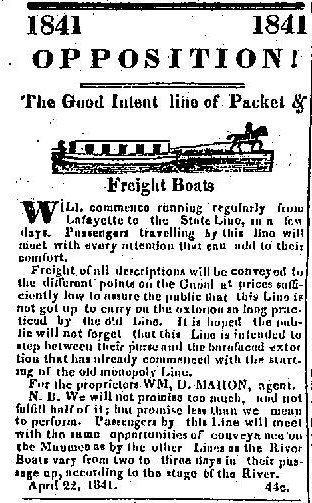
Opposition on the canal
In April 1841 William D. Mahon headed his canal advertisement with one word, OPPOSITION, and promised to step between the public's purse and the old line's extortion. By January his horses and harness had been attached.
Fort Wayne
The value in this market
At the end of August 1843 two Fort Wayne merchants set out the paper a farmer might be handed across their counter. A dollar in old scrip bought 85 or 90 cents of goods that week. A dollar in Blue Dog bought 40. Nobody would put a number on the Blue Pup.
Fort Wayne
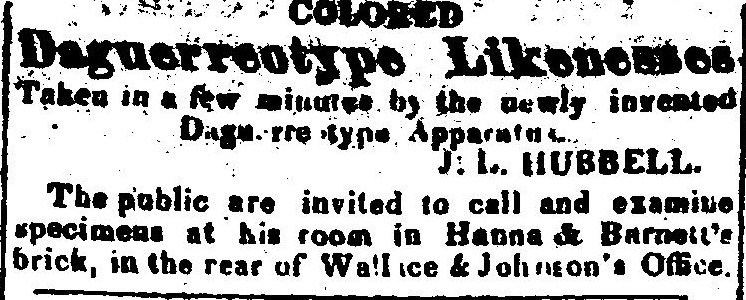
As true to nature as the reflection in a mirror
In the autumn of 1843 Charles E. Keith took rooms in a brick building in Fort Wayne and set out a camera. Four weeks later the town had a daguerreotypist of its own, and the editor of the Sentinel said the same thing about both men's likenesses: as true as a mirror.

Fort Wayne
Boiling down their ashes to black salts
In November 1843 a man named Miller began building an ashery in Fort Wayne, and several farmers had bought kettles to boil their ashes down to black salts. In 1845 Miller wanted a hundred tons. In 1854 the last call for black salts ran three weeks.
A note on who writes this
The Standard is published by Indian Lakes Marketing, the same company that runs a marketing business. It is the same business, not a separate one, and some of the businesses written about here are or have been its clients.
Where that is true, the piece says so at the top. Money does not change what a piece says or whether it runs, and listings and profiles are free. If any of that ever stops being true, this page will say so.