Skip to content

History

Towns

Pieces

Fort Wayne

A carrying place of nine miles

In December 1760 the officer holding Detroit explained why a lieutenant had gone to keep the post at the head of the Maumee through the winter. He gave three reasons in one sentence. In 1917 a Fort Wayne historian quoted it and changed the only part about this ground.
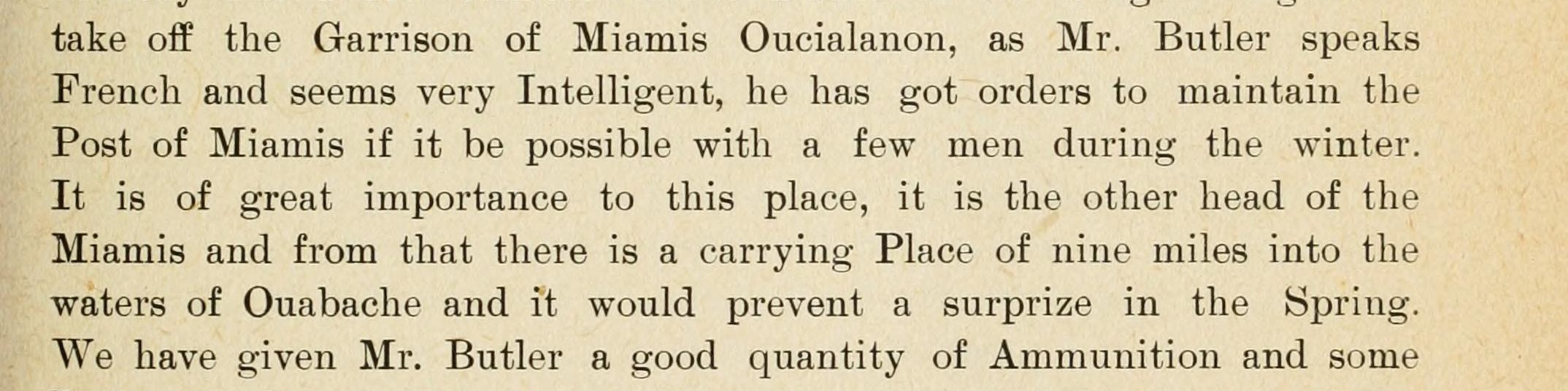
A printed page carrying Campbell's sentence that the post at the Miamis is of great importance, being the other head of the river with a carrying place of nine miles into the waters of the Ouabache.

Michigan Historical Collections volume 19, page 47, scan leaf n60, via the Internet Archive.
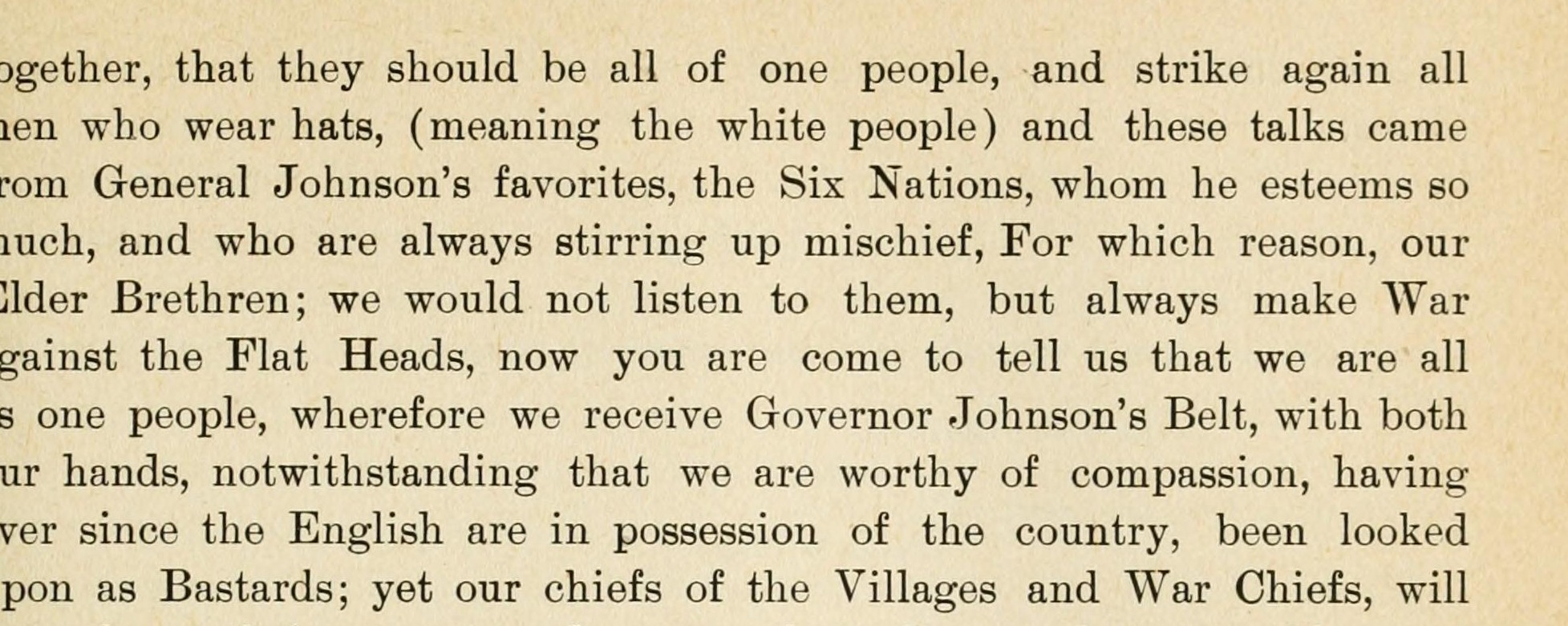
  • A printed page carrying the Miami answer, including the sentence saying the talks came from General Johnson's favorites, the Six Nations, whom he esteems so much, and the sentence saying they have been looked upon as Bastards ever since the English came into possession of the country.

    Beyond Allen County

    Looked upon as Bastards

    In August 1773 the Miami answered Sir William Johnson, and told his deputy that the mischief in the country came from the Six Nations, whom Johnson trusted most. Then they said what ten years of English possession had been worth to them.

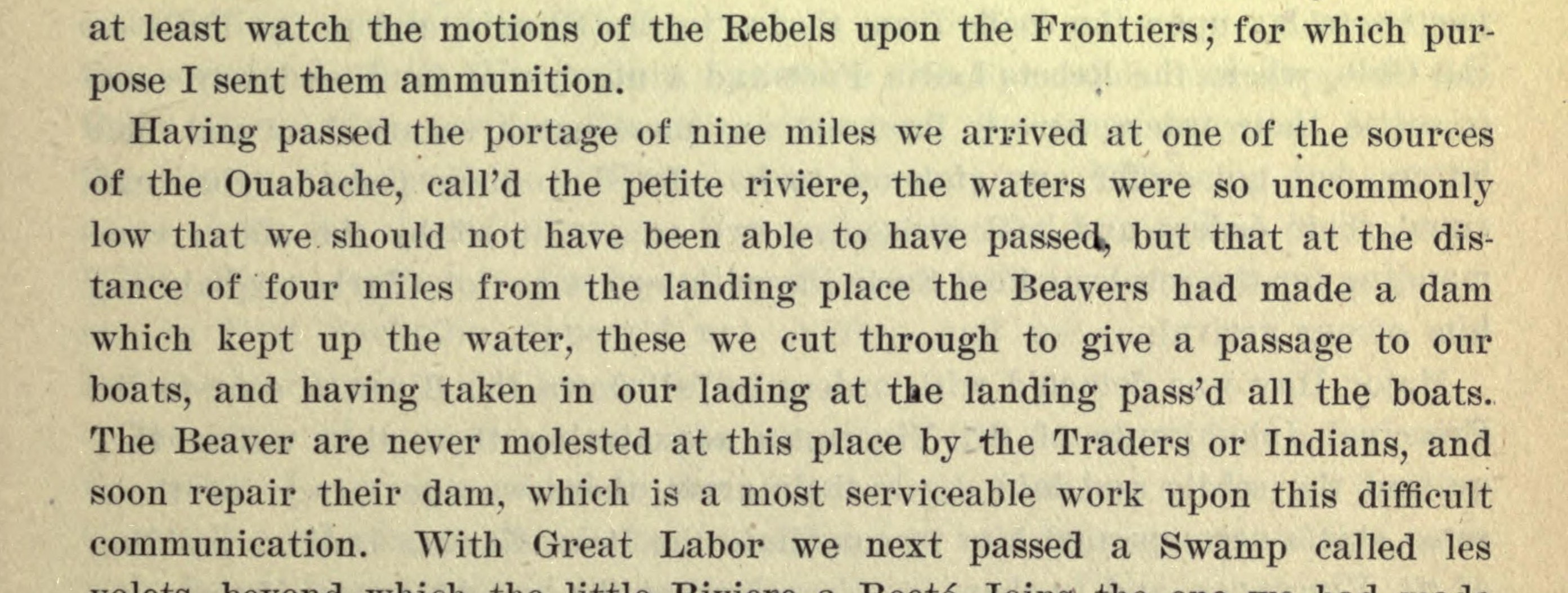
  • A printed page carrying Hamilton's account of passing the portage of nine miles and finding a beaver dam four miles from the landing place.

    Fort Wayne

    The beavers had made a dam

    A British force crossed the nine mile carrying place at the head of the Maumee in October 1778 and found the water beyond it too low to float the boats. What carried them down was a beaver dam, and the officer who cut it wrote down why nobody there touched the beaver.

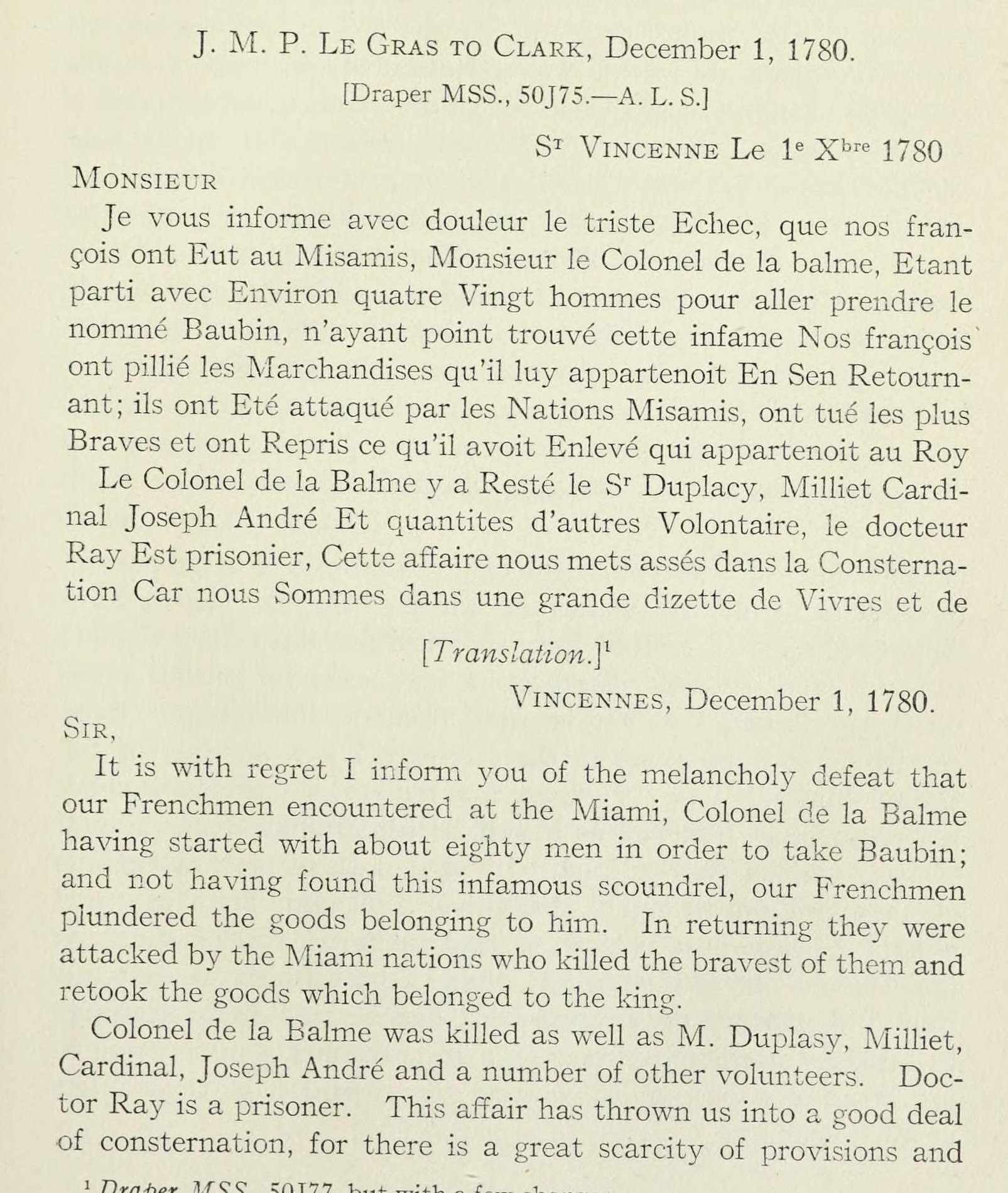
  • A printed page carrying a letter in French above its English translation. The heading reads J. M. P. Le Gras to Clark, December 1, 1780.

    Fort Wayne

    Duplasy, Milliet, Cardinal, Joseph André

    A French colonel rode out of Ouiatanon in 1780 for one storehouse at the Miami town. Two men wrote down what happened to him within a month, one at Vincennes and one at Detroit. The county's four histories used neither, and worked from what old men remembered.

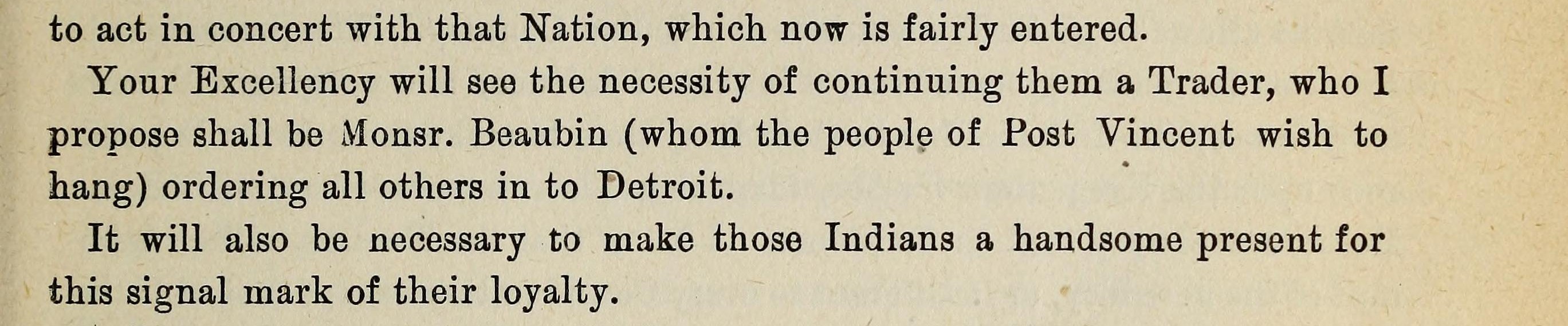
  • A printed page carrying De Peyster's proposal that Beaubien be continued as the trader, with the parenthesis that the people of Post Vincent wish to hang him.

    Fort Wayne

    A man there is so much trust put in

    An English captain at the Miami town in 1781 could not read the accounts he was signing or follow the councils he was reporting, and leaned on one trader for both. That trader is why a French colonel rode four days across country to rob a single building at the forks.

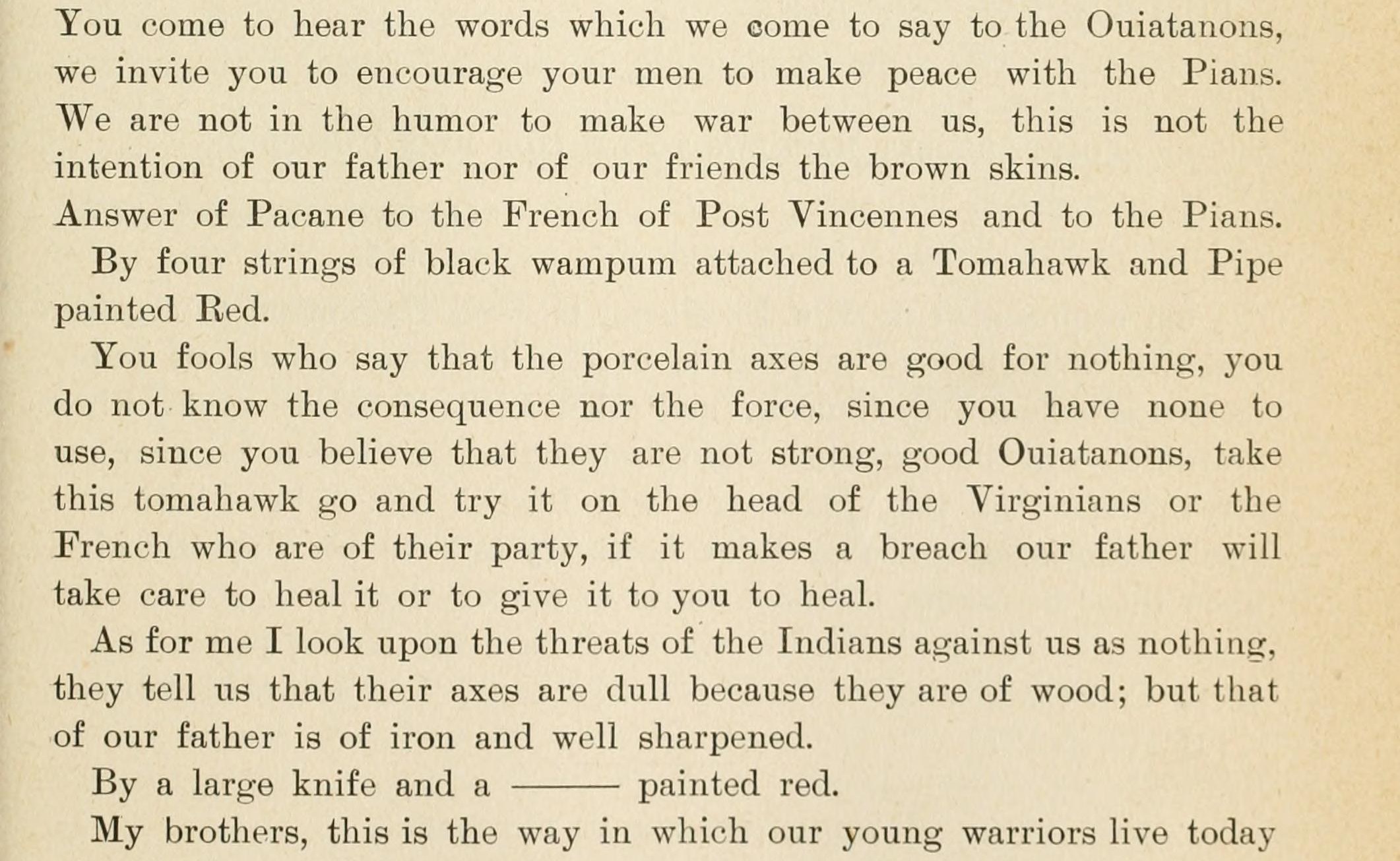
  • A printed page carrying the heading Answer of Pacane to the French of Post Vincennes and to the Pians, the first presentation of black wampum on a tomahawk and pipe painted red, and lower down a line with a blank rule where an object should be named.

    Fort Wayne

    If I go this is the way in which I shall present myself

    Messengers came up to the Miami town in February 1781 with a speech on white wampum, inviting the Miami to change sides. A chief answered with four objects and every one of them was painted red, and then he stopped speaking and sang.

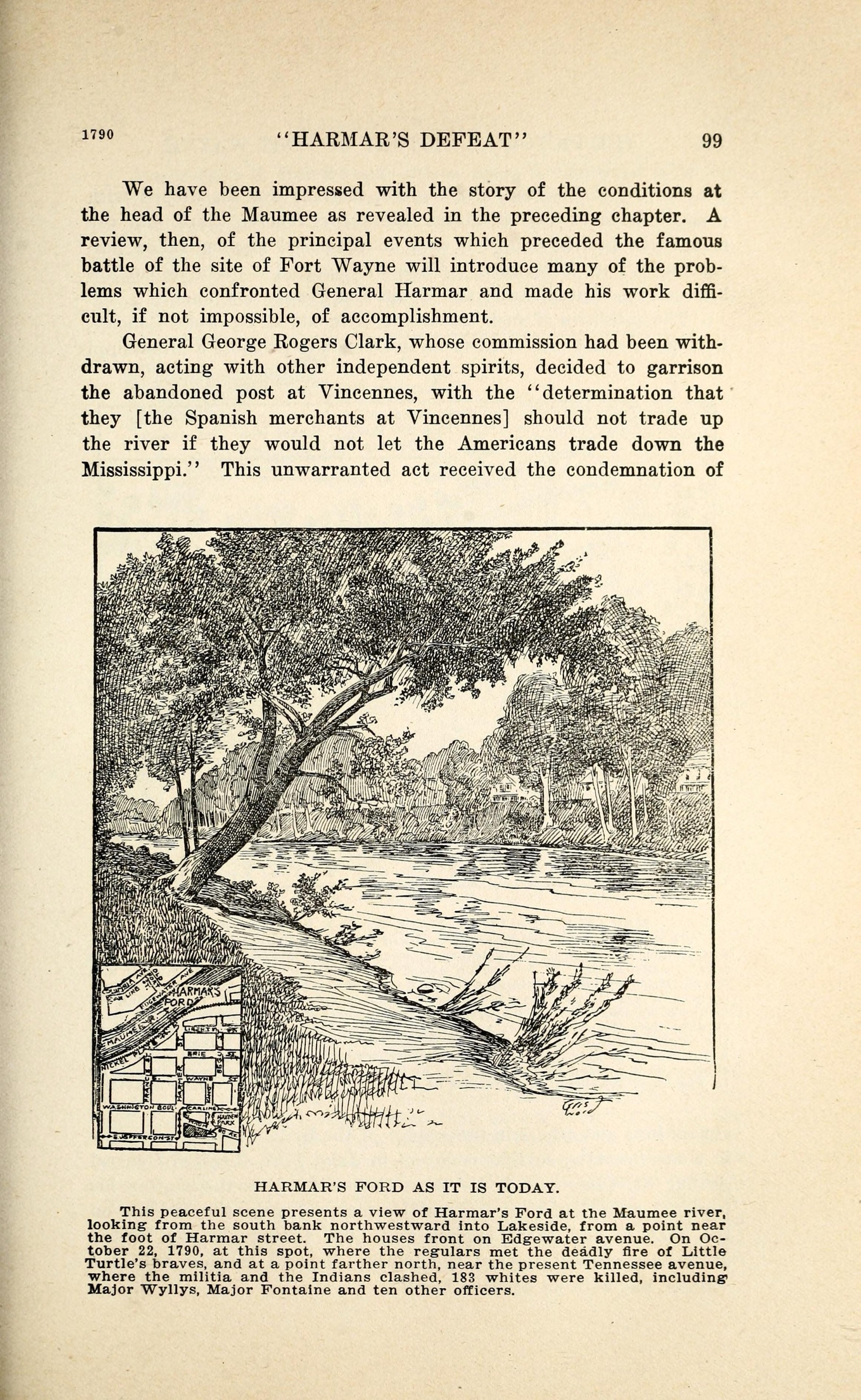
  • A printed page from a 1917 volume, numbered 99, with a running head in quotation marks. Below two paragraphs of text sits a pen and ink drawing of a river seen from a wooded bank, a large tree leaning out over the water from the left, houses among the trees on the far side, and a shelving gravel bar in the foreground. A small inset street map is set into the lower left corner of the drawing, and a signature is worked into the lower right. A caption in small capitals runs beneath it.

    Fort Wayne

    He was in the engagement

    An old soldier who marched with Harmar wrote that a Miami chief was in the river that morning. Twenty-five years later the county's first historian put the same man on the bank, a boy of ten or twelve.

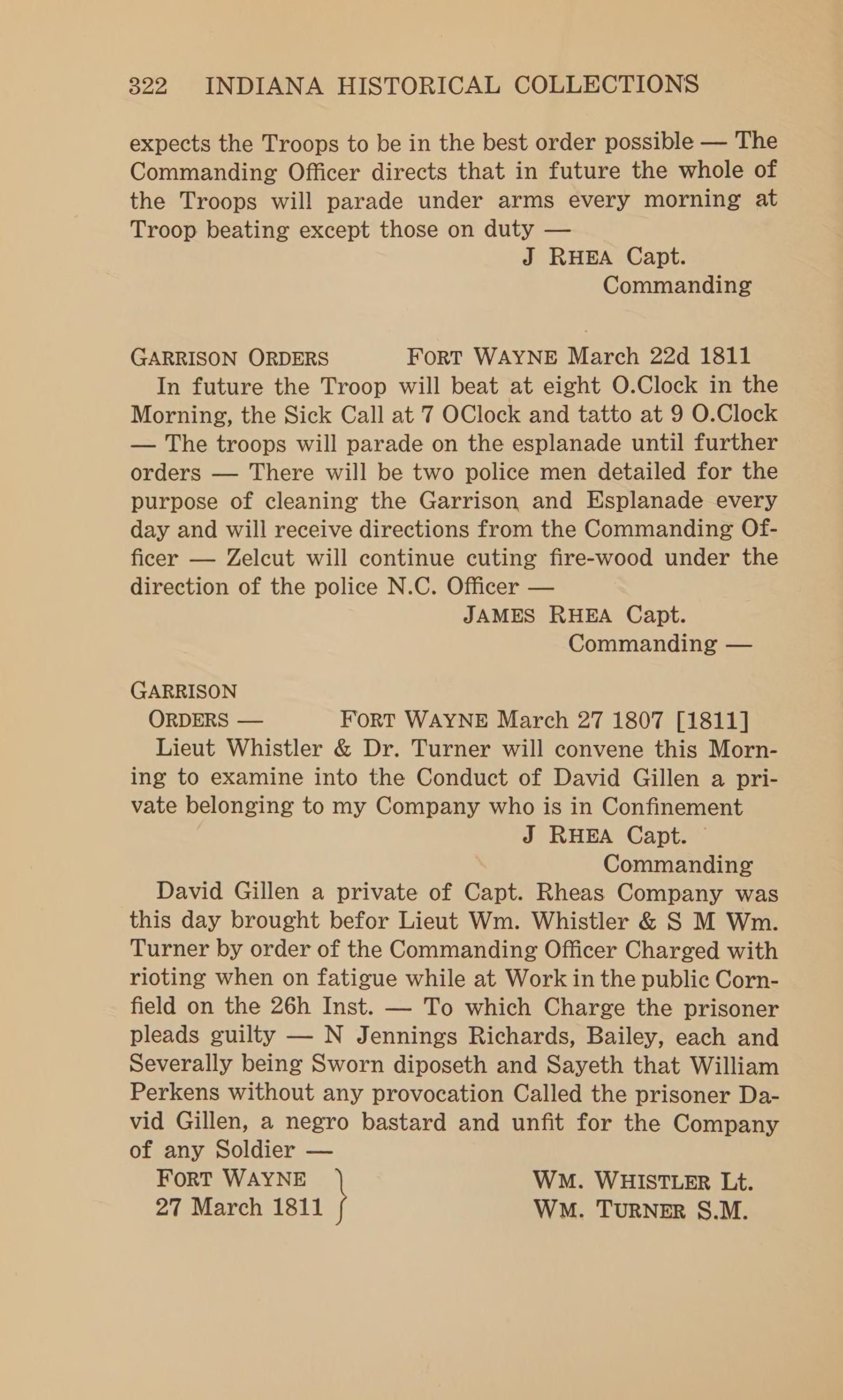
  • A printed page from a 1927 volume of historical collections, numbered 322 at the top left beside a running head in small capitals. A single column of set type on toned cream paper, broken twice by short centred headings, with a brace and two signatures set to the right at the foot of the page.

    Fort Wayne

    Without any provocation

    A private pleaded guilty to rioting in the public cornfield. Three men were then sworn, and what they said was not about the riot. The commanding officer punished the other man too, without charging him.

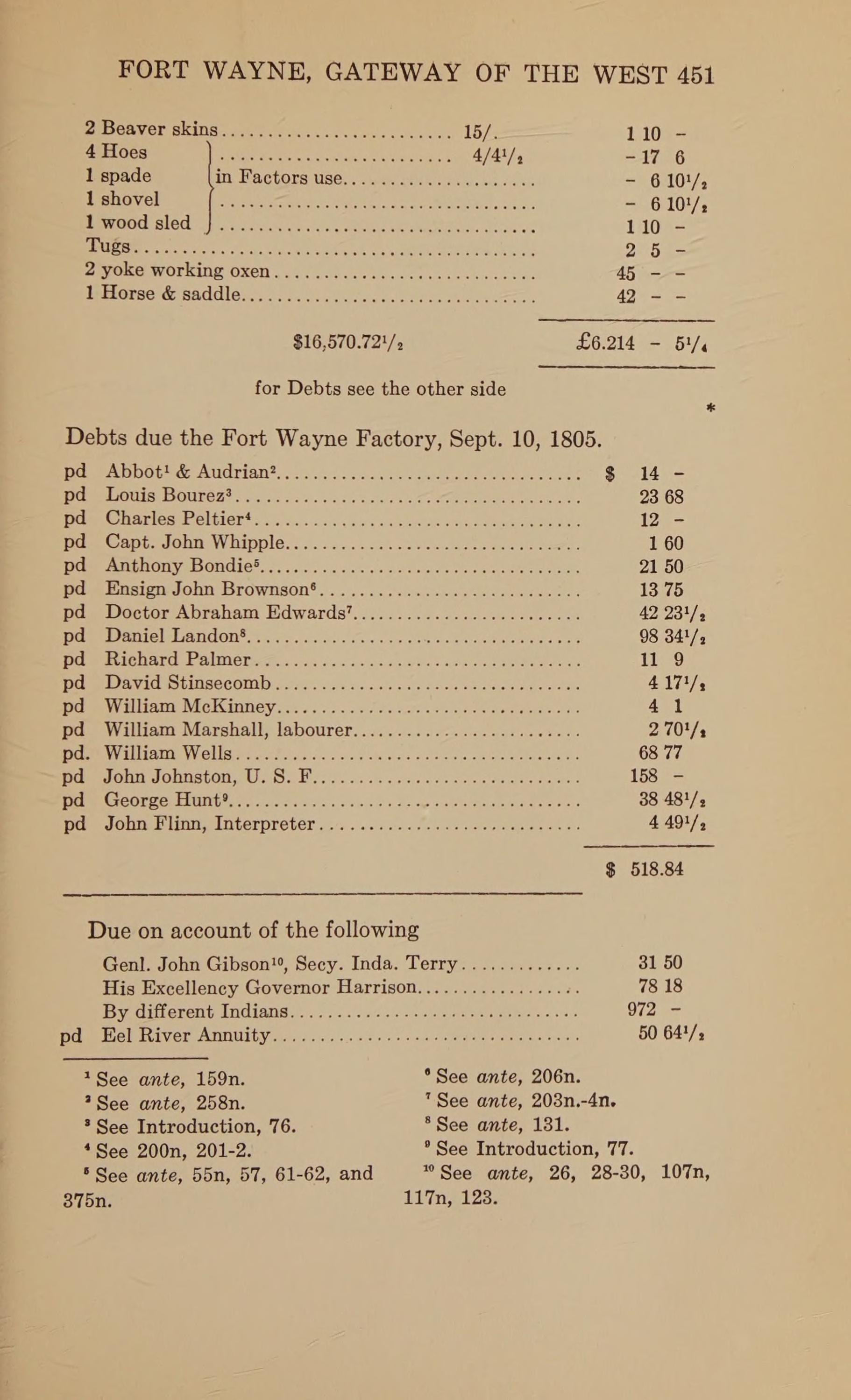
  • A printed page from a 1927 volume of historical collections, numbered 451 at the top left beside a running head in small capitals. Below a short heading, a column of names runs down the left with a column of figures down the right, joined by dot leaders, each line beginning with a small mark in the margin. A rule crosses the page below a subtotal, and a second short heading opens four further lines.

    Fort Wayne

    By different Indians

    John Johnston named every man who owed the United States factory at Fort Wayne, down to a labourer owing $2.70½. The Indian debtors are one line with no name on it, owing nearly twice what the sixteen named men owed together.

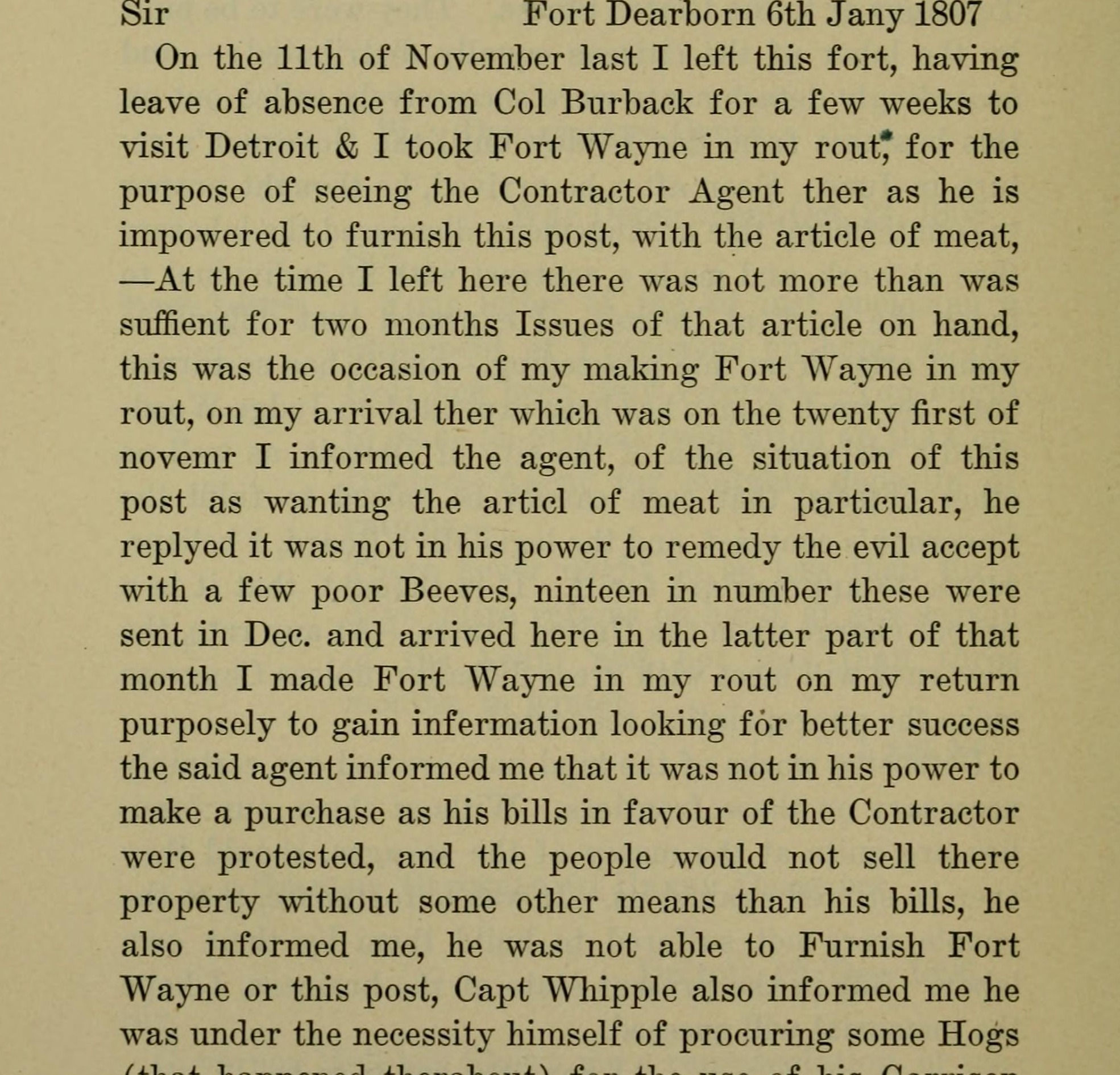
  • A printed page carrying Captain Whistler's letter from Fort Dearborn of 6 January 1807, including the sentence about taking Fort Wayne in his route to see the contractor's agent, the agent's answer of a few poor beeves nineteen in number, and the later sentence saying the agent could furnish neither Fort Wayne nor Fort Dearborn.

    Fort Wayne

    Nineteen in number

    In November 1806 the officer commanding at Chicago routed himself through Fort Wayne to see the contractor's agent about meat. He came away with nineteen poor beeves, and on his way back with nothing at all.

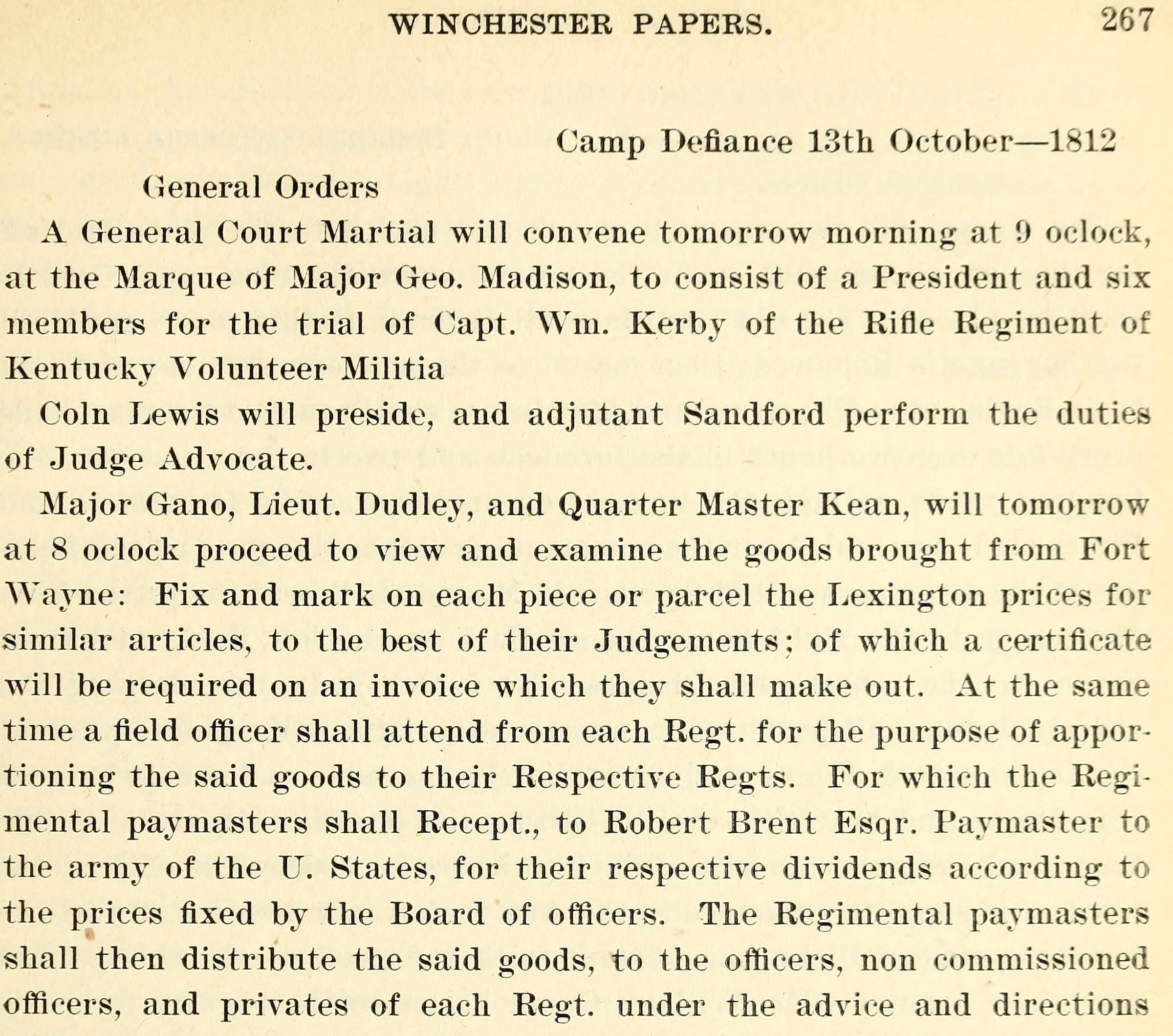
  • A printed page headed Winchester Papers, carrying the general orders of 13 October 1812 from Camp Defiance, in which three officers are told to view and examine the goods brought from Fort Wayne and mark the Lexington prices on each piece.

    Fort Wayne

    The goods from Fort Wayne

    Three weeks after the siege was lifted, three officers were told to price the merchandise carried out of Fort Wayne against what it would have fetched in Lexington. It was then divided by regiment and issued to the men against their pay.

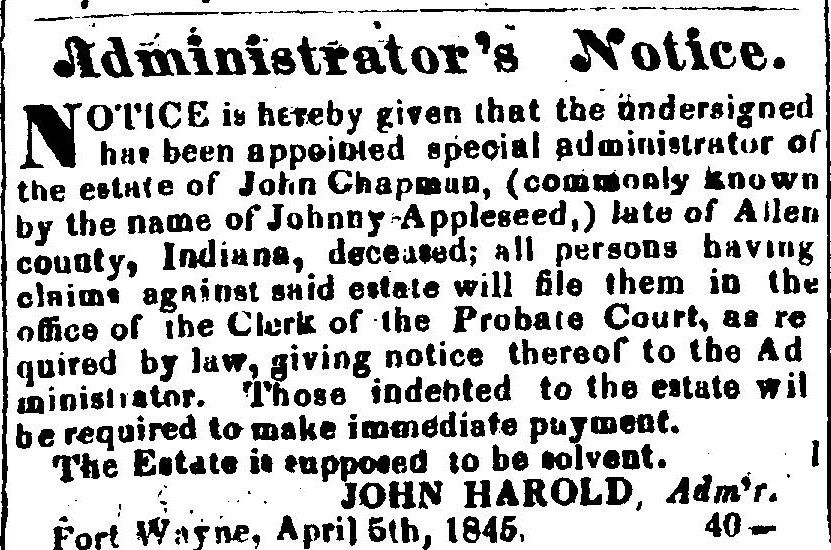
  • A newspaper notice under the heading Administrator's Notice, set in blackletter. Eleven lines of small type give notice that the undersigned has been appointed special administrator of the estate of John Chapman, commonly known by the name of Johnny Appleseed, late of Allen county, Indiana, deceased. It is signed John Harold, Adm'r, and dated Fort Wayne, April 5th, 1845.

    Fort Wayne

    Late of Allen county, deceased

    Word came to John Chapman that cattle had broken into one of his nurseries on the St. Joseph River. He went at once, lay down that night and did not get up again. By 5 April 1845 a notice in Fort Wayne called him late of Allen county, deceased.

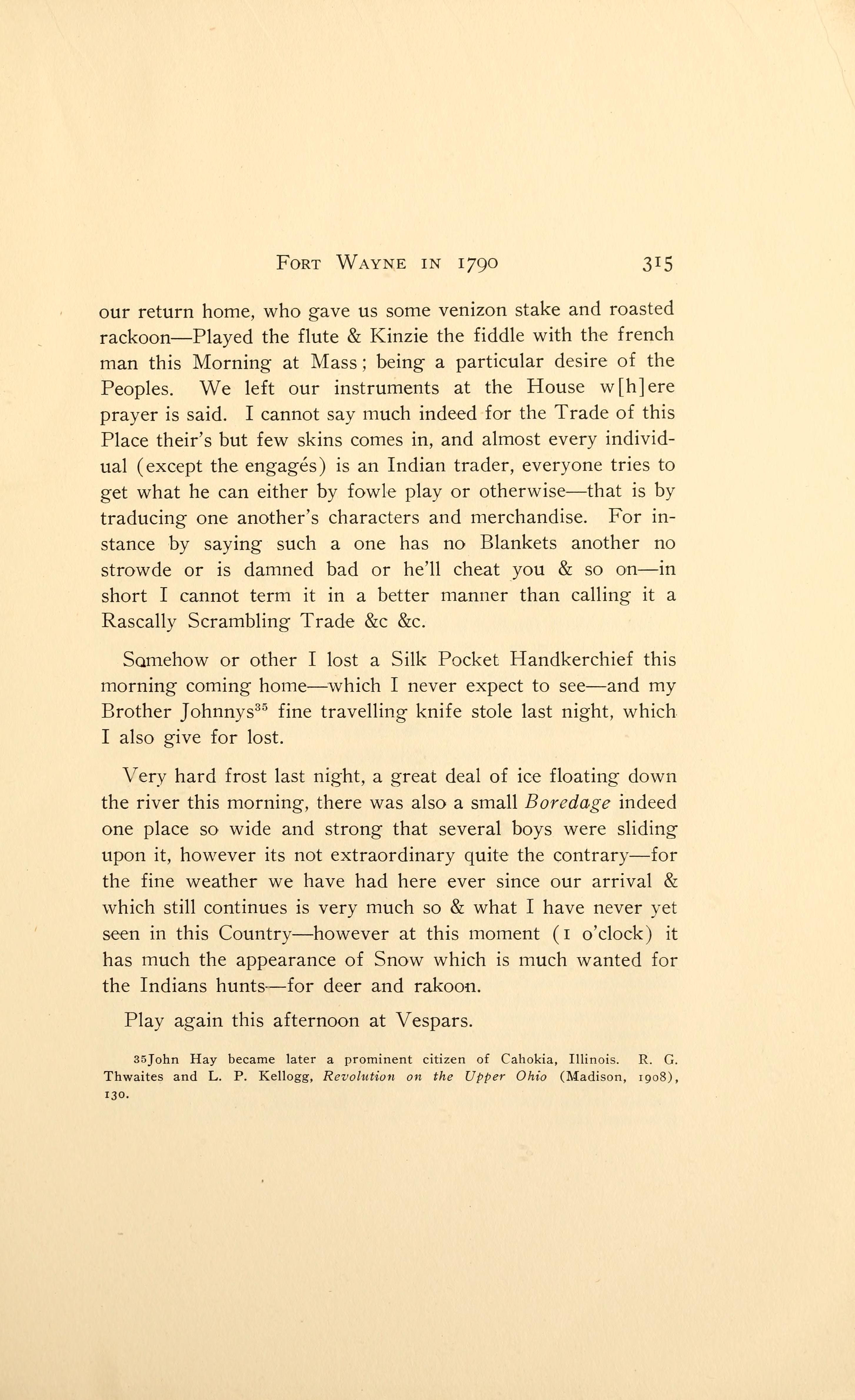
  • A printed page from a 1921 historical society publication, set in one column of type with footnotes below a rule. The entries for Christmas Day 1789 are on it.

    Fort Wayne

    A rascally scrambling trade

    On Christmas morning 1789 Henry Hay played his flute at mass in the Miami town. Through the same winter he wrote down the captives brought in across the river, among them John Witherington, whose wife and seven children were held by other parties.

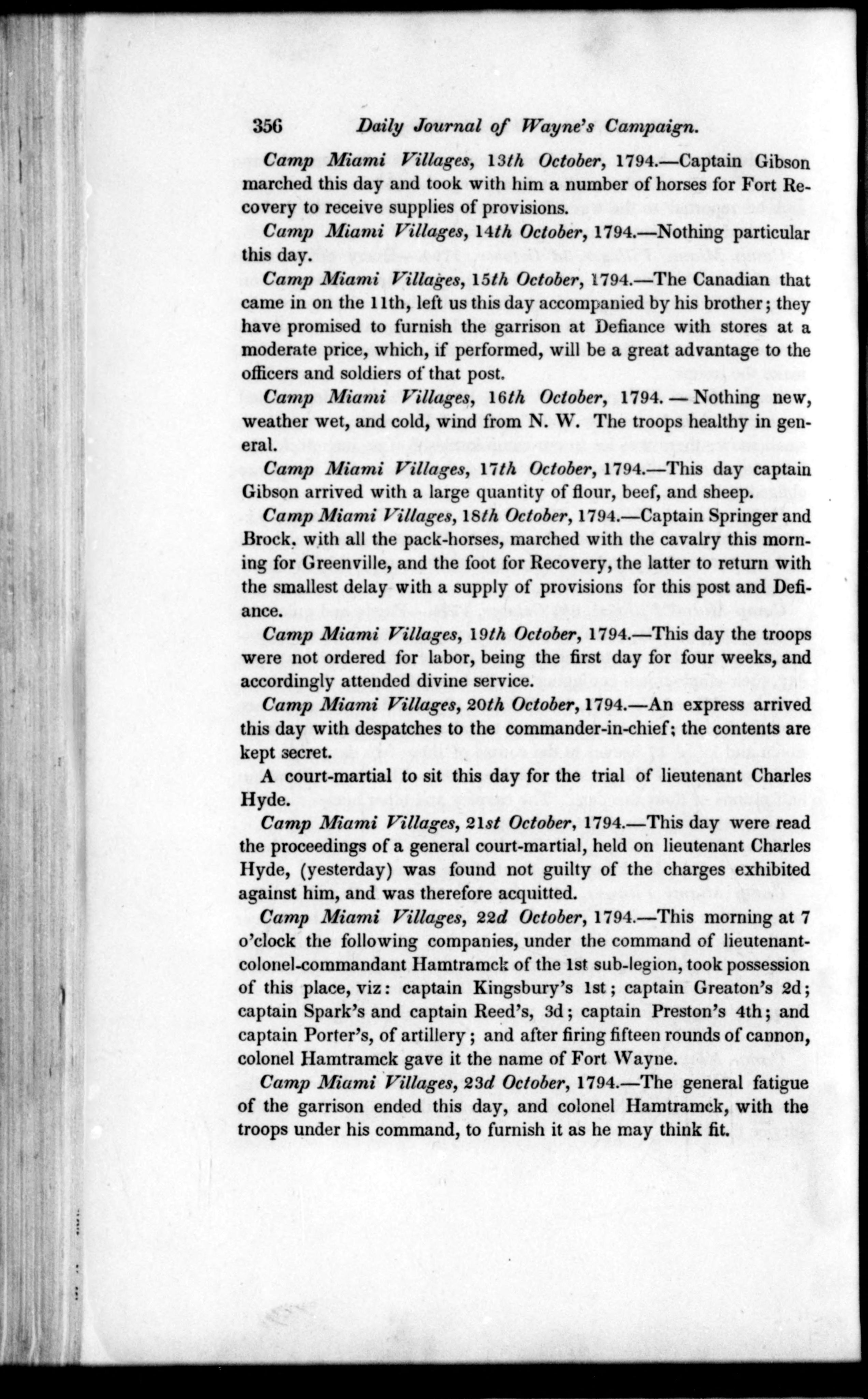
  • A printed page from an 1842 monthly magazine, set in two columns of dated journal entries. The entry for 22 October 1794 is on it.

    Fort Wayne

    Gave it the name of Fort Wayne

    On 22 October 1794 Hamtramck marched six companies into the new fort, fired fifteen rounds and named it. Two officers who were there wrote that down. In 1880 a county history quoted one of them to the day before, then wrote its own 22 October.

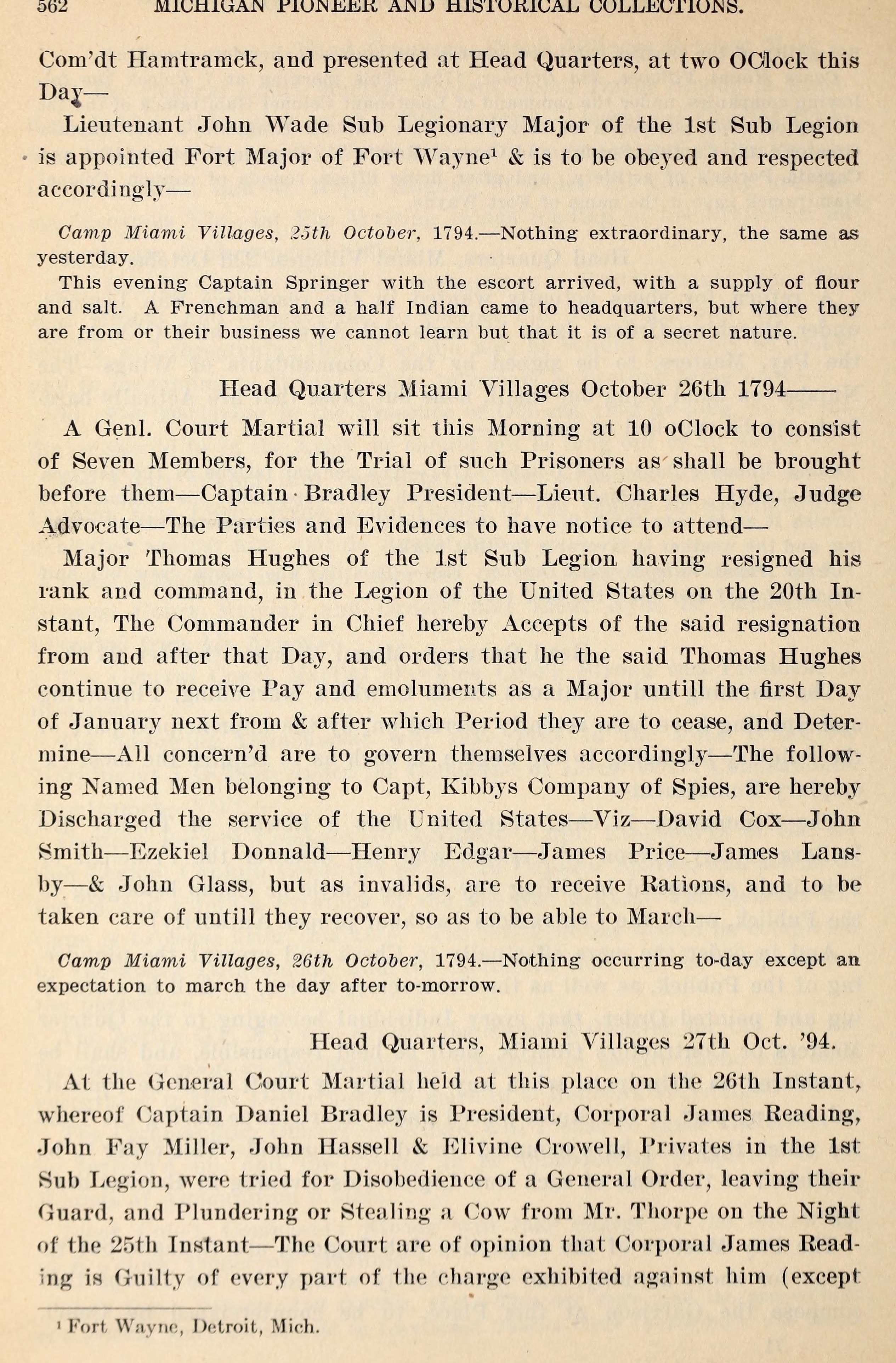
  • A printed page from Wayne's orderly book carrying the order appointing Lieutenant John Wade Fort Major of Fort Wayne, with the editor's footnote at the foot of the page reading Fort Wayne, Detroit, Mich.

    Fort Wayne

    Obeyed and respected accordingly

    Four days after the fort was named, an order gave it to a man to keep. The same order offered twenty five dollars for information on soldiers robbing the country around it, and when Michigan printed it in 1904 its editor put the fort at Detroit.

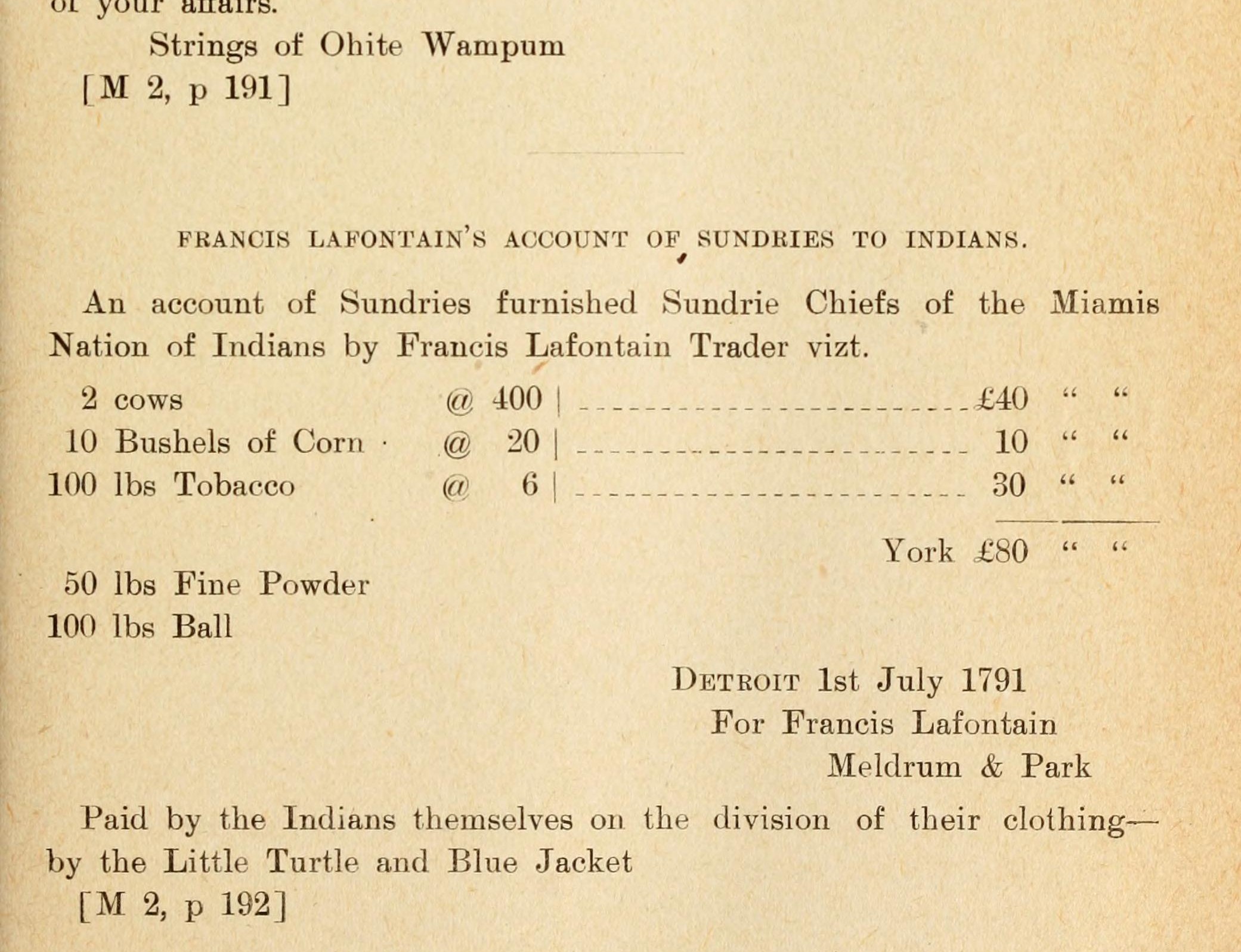
  • A printed page carrying a trader's account: two cows, ten bushels of corn and a hundred pounds of tobacco with their prices, a total of eighty pounds York currency, fifty pounds of fine powder and a hundred pounds of ball with no price, and a line saying the bill was paid by the Indians themselves.

    Beyond Allen County

    Paid by the Indians themselves

    A Detroit trader's bill for two cows, ten bushels of corn and a hundred pounds of tobacco, furnished to Miami chiefs and dated 1 July 1791. The clerk's line at the foot says who settled it, and it was not the Crown.

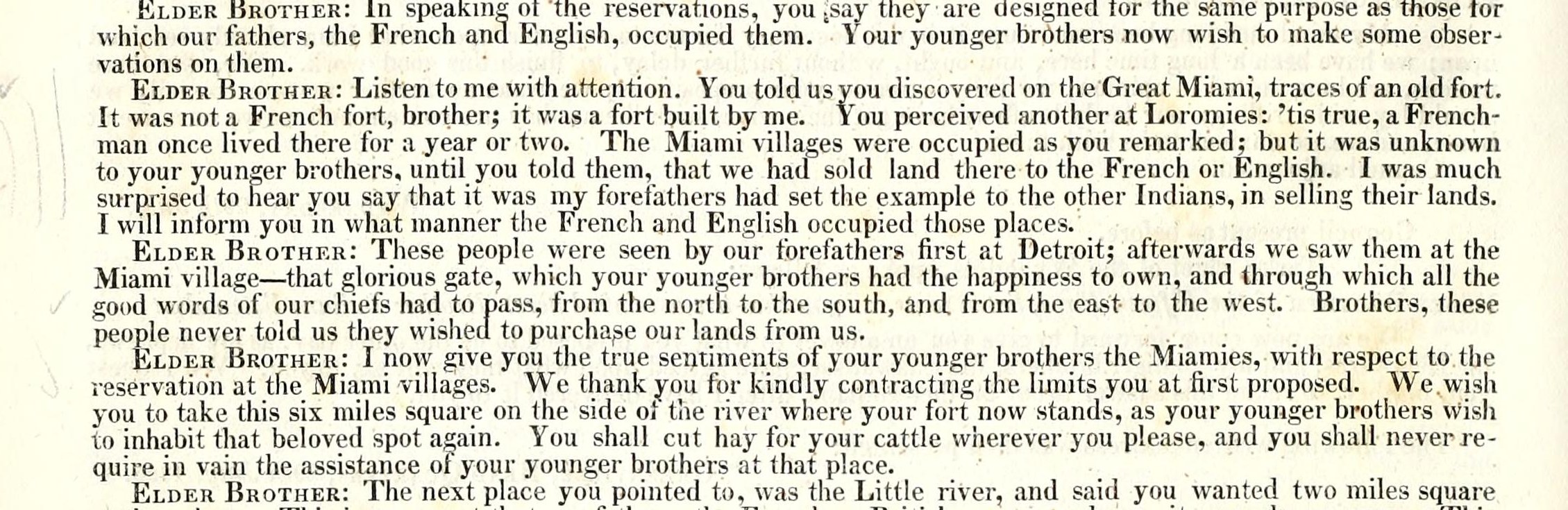
  • A printed page of council proceedings carrying Little Turtle's speech, including the sentence that a fort was built by him and the passage about that glorious gate.

    Fort Wayne

    That glorious gate

    At Greenville in July 1795 Anthony Wayne told the council that the ground where the St. Joseph meets the St. Mary's had been ceded to the French long ago. A Miami chief stood up and answered that nobody had ever sold it, and that one of the forts Wayne had traced was his own.

  • Fort Wayne

    His hand in the steam press

    In December 1855 Daniel W. Burroughs caught his hand in his steam press. Six weeks later the paper across town reported that his Standard had stopped because of it. The county histories remembered a sale instead.

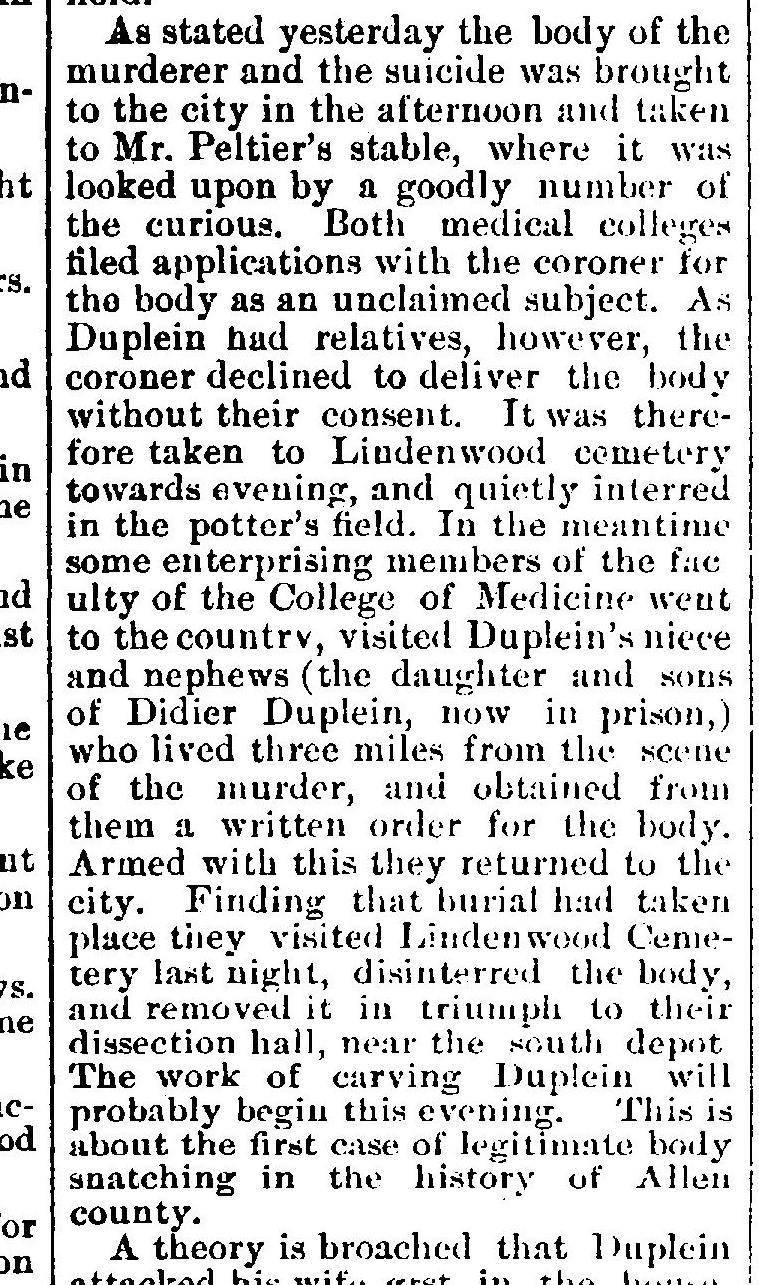
  • A newspaper column reporting that both medical colleges applied to the coroner for a body as an unclaimed subject and that faculty members later disinterred it.

    Fort Wayne

    The prayer for the dead in Latin

    A woman buried outside consecrated ground in 1879, with no priest, and an old lady saying the Latin at the graveside. Her husband had killed her and himself. What the paper printed most of was the week two medical colleges spent acquiring three bodies.

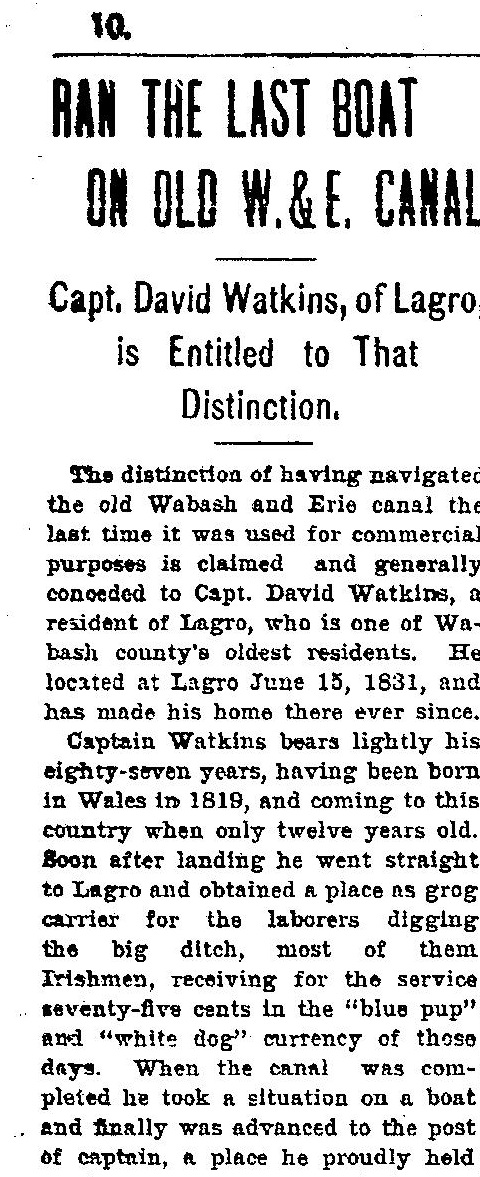
  • A newspaper column headed Ran the Last Boat on Old W. and E. Canal, with a subheading saying Captain David Watkins of Lagro is entitled to that distinction, and the opening paragraphs describing his arrival from Wales and his work as grog carrier for the men digging the canal.

    Beyond Allen County

    Ready to load for the next trip

    A railroad put a charge on every bushel a Lagro grain buyer loaded, then refused to set him cars. He raised a sunken canal boat out of the mud instead, and its captain moved wheat all summer on a canal that had stopped running.

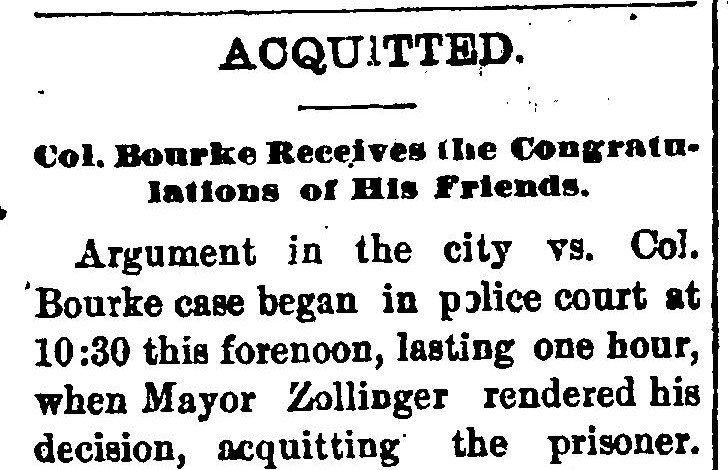
  • A newspaper column headed ACQUITTED, with a smaller line beneath reading Col. Bourke Receives the Congratulations of His Friends.

    Fort Wayne

    Forfeited her bail of ten dollars

    Eight people came before the mayor of Fort Wayne on a Saturday morning in 1880. One of them lost ten dollars in a single sentence. The man charged with associating with her was tried for four days, and the paper reported that his friends congratulated him.

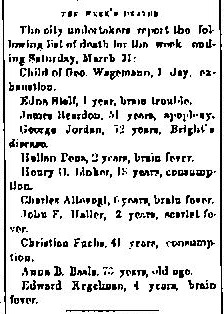
  • A narrow newspaper column headed The Week's Deaths, listing eleven names with an age and a cause against each.

    Fort Wayne

    The day's deaths

    One Saturday morning in 1894 the Fort Wayne Sentinel printed five deaths under a standing heading, with funeral notices and the city undertakers' list of the week's dead. Three of the names appear twice in the column, with different ages and different causes.

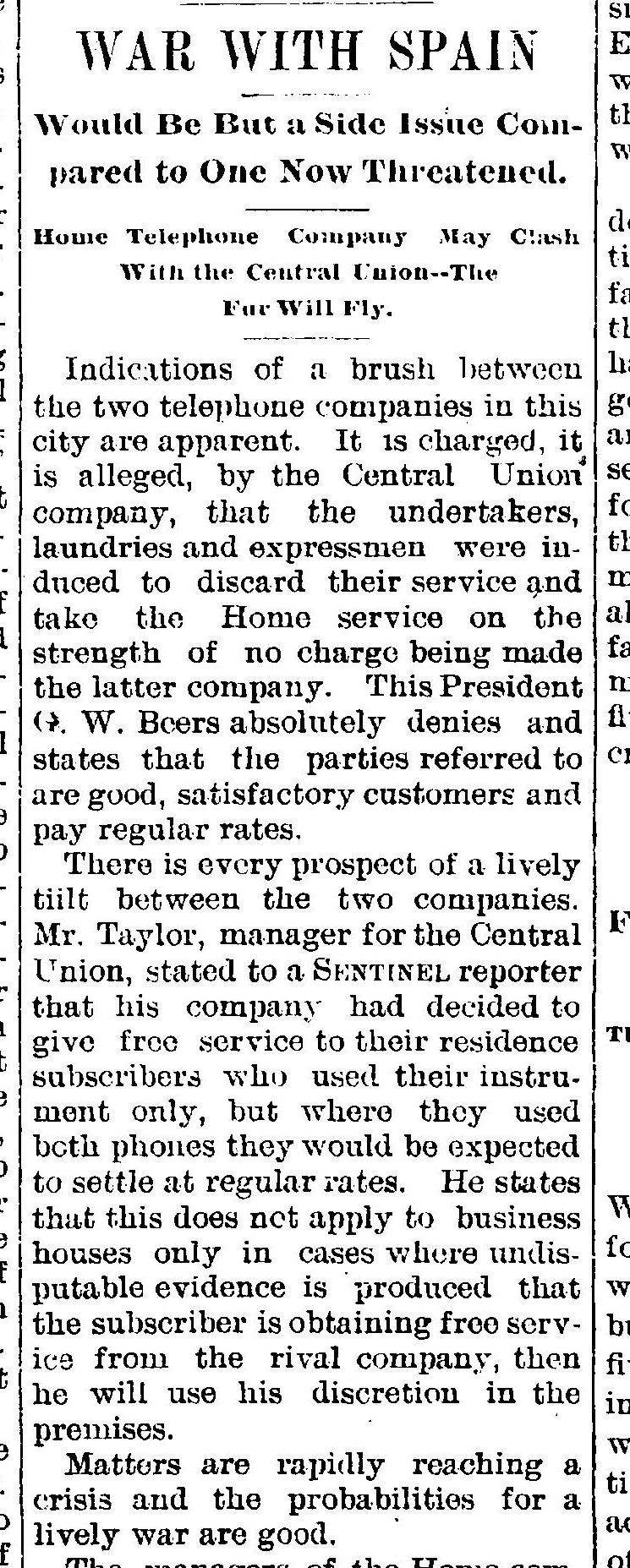
  • A newspaper column headed WAR WITH SPAIN, above a report that the Home Telephone Company may clash with the Central Union.

    Fort Wayne

    Bell and Home

    A second telephone company opened in Fort Wayne in 1896 with six hundred subscribers and no franchise. Within two years the two were quarrelling in print, and for twenty years a business that wanted to be reachable printed two numbers.

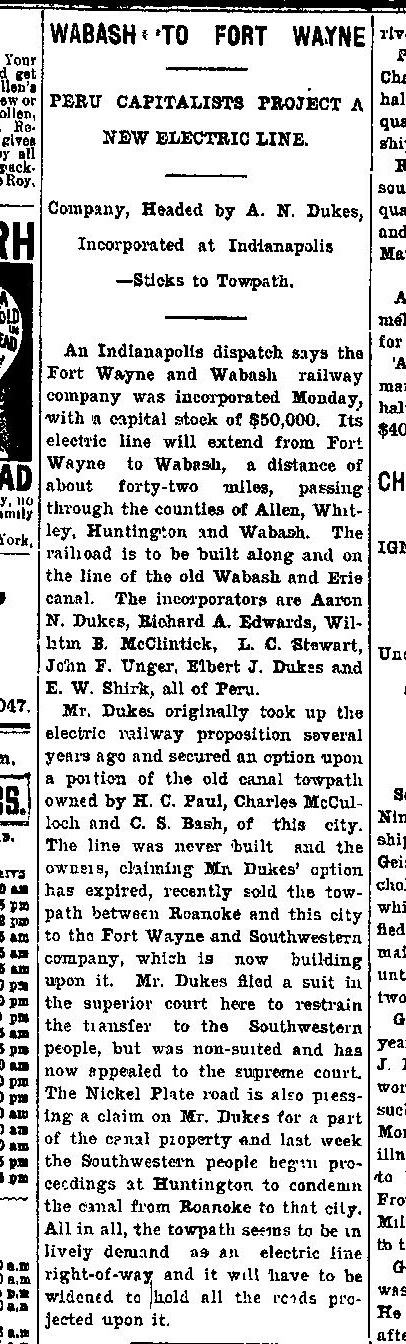
  • A newspaper column headed Wabash to Fort Wayne, Peru Capitalists Project a New Electric Line, Sticks to Towpath.

    Fort Wayne

    In lively demand

    Twenty-six years after the last boat, the towpath of the Wabash and Erie canal was in demand. Three Fort Wayne men owned a stretch of it, an interurban was being built on it, and the man who had held an option was appealing to the supreme court.

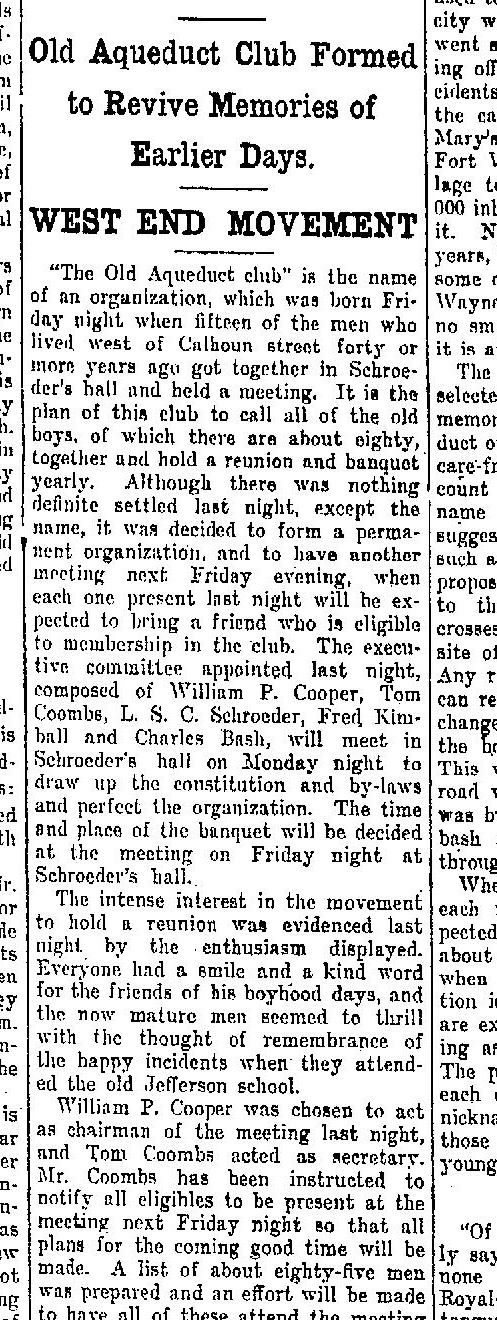
  • A newspaper column headed Old Aqueduct Club Formed to Revive Memories of Earlier Days, above a second heading reading WEST END MOVEMENT.

    Fort Wayne

    Fragments of the rock

    Fifteen men met in a hall in 1912 and named a club after an aqueduct that was no longer there. They found a hundred more of themselves and banqueted yearly, and in 1916 a contractor cutting a sewer through the old canal bed handed them pieces of it.

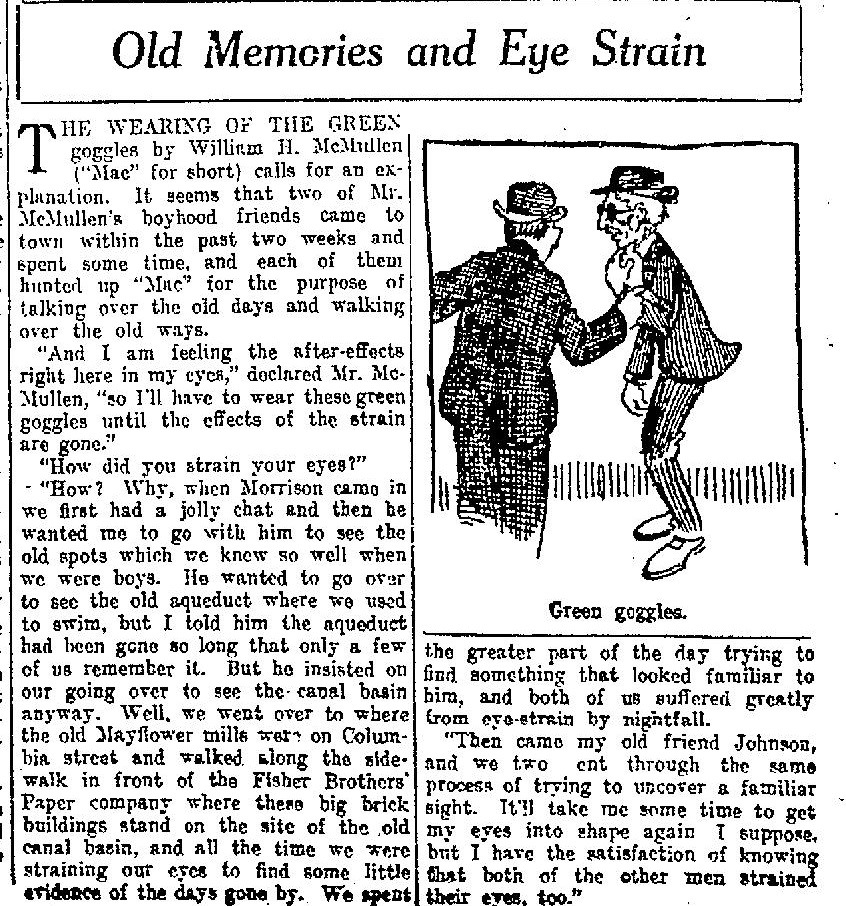
  • A newspaper item headed Old Memories and Eye Strain, with a column of text beside a pen drawing of two men in overcoats and bowler hats leaning towards each other in the street, one of them in spectacles, captioned Green goggles.

    Fort Wayne

    Only a few of us remember it

    In 1913 two boyhood friends came back to Fort Wayne and asked William McMullen to show them the canal they had swum in. They walked Columbia street for two days and found nothing, and the Sentinel printed it as a joke with a cartoon.

The county

Allen County, Indiana. The twenty civil townships, with the present city limits of Fort Wayne dashed.AboiteAdamsCedar CreekEel RiverJacksonJeffersonLafayetteLakeMadisonMarionMaumeeMilanMonroePerryPleasantScipioSpringfieldSt. JosephWashingtonWayne
The twenty civil townships. The dashed line is Fort Wayne's city limits today, as the Census Bureau draws them, not the town at any earlier date. A township fills with its colour once a piece is set in it.

Support The Standard

Nothing on this site is behind a paywall, nothing on it is sponsored, and there are no advertisements on it and never will be. If it has been worth something to you, there are three ways to give something back, and only one of them involves money.

Support The Standard